EN
EN

An expandable container house can be manufactured in one country and installed in another, but that does not mean exactly the same specification should be used everywhere. Australia, the United States, Canada and European markets have different climates, site conditions, transportation environments and local building requirements. A successful international modular-house project therefore begins with the destination rather than simply choosing a factory product from a standard catalog.
OCM House works with international buyers on expandable container-house projects and can customize the building configuration around the destination, application and required floor plan. The goal is not to create a completely different building for every country, but to use a flexible modular platform and adapt the relevant elements—such as insulation, windows, utilities, layout and exterior finish—to the actual project.
Australia is a particularly relevant market for expandable container houses because buyers may use modular buildings for backyard accommodation, guest houses, rural accommodation, worker housing, tourism projects and other applications. However, Australia covers a wide range of climates, so a standard configuration should not automatically be applied across the country.
In hotter regions, the building envelope should consider roof insulation, solar exposure, ventilation, glazing and cooling. In cooler southern areas, insulation and heating become more important. Coastal locations may also require attention to moisture, corrosion and local environmental conditions.
The layout should reflect the intended application. A backyard guest house may need one bedroom, bathroom, kitchenette and living area. A family unit may require multiple bedrooms and a larger kitchen. A worker-accommodation project may prioritize repeated layouts and efficient maintenance.
For Australian buyers, the project should also be reviewed against applicable local planning, structural, electrical and building requirements before final approval. OCM can provide product technical information, while local professionals should assess the final project against the requirements of the installation location.
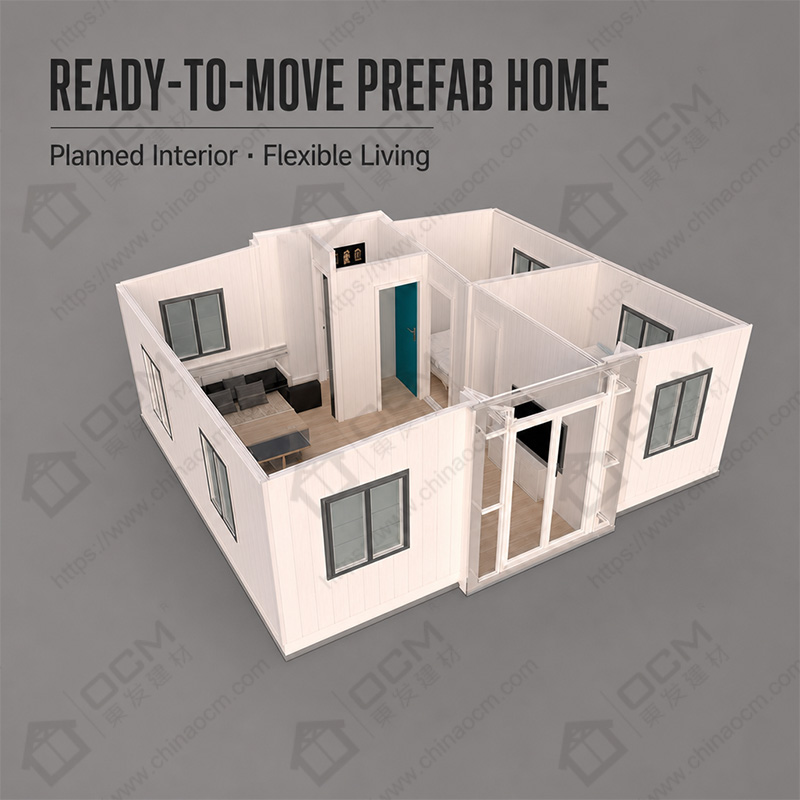
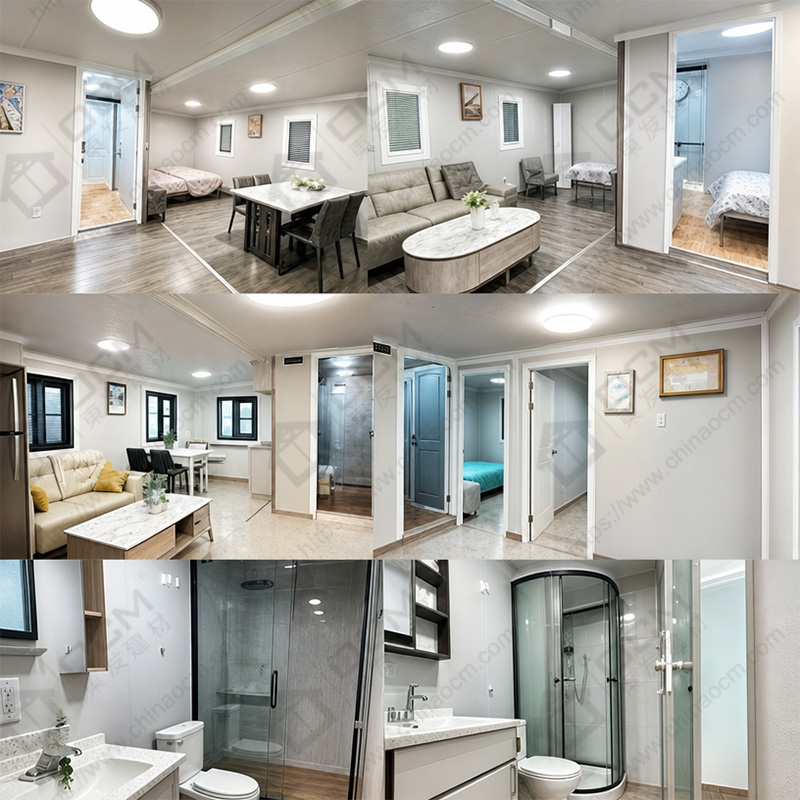
The United States also covers a wide range of climates, from hot and humid southern regions to cold northern states and dry western areas. An expandable container house for Florida, Texas, California and Alaska cannot simply use the same specification without considering the local environment.
For hot climates, solar control, insulation, ventilation and HVAC are important. Cold climates may require stronger thermal performance, heating and condensation management. High-wind or severe-weather regions may also require project-specific structural evaluation.
The application makes an equally large difference. A backyard guest house may require a compact one-bedroom configuration, while workforce housing may require standardized repeated units. A resort project may prioritize large windows and upgraded interiors, whereas a construction site may focus on durability and quick deployment.
As with any international building project, applicable local codes and permits should be reviewed by the relevant professionals before installation. The manufacturer can provide technical information, but local compliance is ultimately connected to the actual site and intended building use.
Cold-climate applications create different priorities. A modular building installed in Canada or a mountain region may need careful consideration of insulation, windows, heating, moisture management, roof construction and snow-related structural requirements.
The floor is also important. A raised modular building can be exposed to cold air beneath the floor, increasing the importance of floor insulation and thermal continuity.
OCM's project experience in cold environments can be useful as a reference when discussing these requirements. The Canadian ski-resort environment, for example, demonstrates why modular buildings should be adapted to actual weather conditions instead of relying on a standard configuration.
A cold-climate buyer should provide the project city or region, intended occupancy, heating requirements and site conditions as early as possible. This allows the manufacturer to discuss the appropriate building configuration before production.
Regardless of destination, international buyers need to understand that the finished expanded building and the transport configuration are different things. The packed dimensions determine shipping, while the expanded dimensions determine the final foundation and land-use requirements.
Before purchasing, confirm packed dimensions, weight, loading method, shipping container requirements and destination port. The buyer should also consider inland transportation after the cargo reaches the port.
Installation planning should happen simultaneously. The site needs a suitable foundation, adequate vehicle access and enough space for unloading and expansion. Utility connections such as electricity, water and wastewater should be prepared before delivery.
For remote locations, final-mile transportation can be one of the most challenging parts of the project. Roads, slopes, bridges and lifting equipment should therefore be reviewed before production begins.
One of the benefits of working directly with a manufacturer is the ability to adapt the product to the destination market while maintaining a common modular production platform.
For example, an Australian guest house may require strong solar protection and cooling, while a Canadian accommodation unit may require enhanced thermal insulation and heating. A U.S. backyard unit may need a different room layout from a worker-accommodation project.
The manufacturer can also provide product-specific drawings and technical information to support local engineering and installation planning.
Before sending an inquiry, the buyer should prepare the country and city, application, number of occupants, number of units, preferred size, bedrooms, bathrooms, kitchen requirements, climate information, preferred interior finish, exterior finish, electrical requirements, destination port and target delivery schedule.
The more accurate the project information, the more useful the factory's proposal will be.
If the buyer does not yet have a finished floor plan, that is not necessarily a problem. A project description can be enough to start the discussion. For example:
From this information, the manufacturer can begin discussing possible layouts, technical configurations and quotation requirements.
1. Can OCM supply expandable container houses to Australia?
OCM works with international buyers and can discuss product specifications, packing and export arrangements for Australian projects.
2. Can an expandable container house be customized for the USA?
Yes. Layout, insulation, windows, doors, finishes and utility configurations can be discussed according to the project.
3. Are expandable container houses suitable for Canada?
They can be designed for cold-climate applications, but the final specification needs to address insulation, heating, moisture, snow and local engineering requirements.
The best international modular-building strategy is not to use one identical product specification everywhere. Instead, the core building platform can be adapted according to climate, application, transportation, site and local requirements.
OCM House can work with international buyers on expandable container-house projects for residential, backyard, workforce, hospitality and commercial applications. Send OCM your country, city, required size, application and number of units to develop a destination-specific expandable container house proposal.