EN
EN

The Australian market has strong demand for flexible accommodation solutions that can be used for backyard guest accommodation, tourism, glamping, rural projects, resorts and other applications where conventional construction may require significant time and on-site coordination. An Apple Cabin offers a different approach by combining a distinctive modular design with factory production, transportation and project customization. For Australian buyers, however, purchasing a prefab cabin is not simply about choosing an attractive cabin from a catalog. The building must also be suitable for the local climate, site conditions, transportation route, foundation, utilities and intended use.
OCM House provides Apple Cabin solutions for international projects and can customize layouts, finishes, windows, doors, insulation, bathrooms, kitchens and other components according to project requirements. This makes the Apple Cabin suitable for different Australian applications, from a compact backyard guest room to a multi-unit glamping development or resort accommodation project. The key is to define the project first and then develop the cabin configuration around the site and intended guests.
Australia offers many different accommodation environments, from urban and suburban properties to coastal tourism destinations, rural properties, mountain areas and remote hospitality sites. A modular cabin can be attractive because the manufacturing process can be moved partly or substantially into a factory before the building reaches the project site. This can reduce the amount of conventional construction work that needs to take place directly on the property, although foundation, delivery, utilities and installation still need to be properly planned.
For backyard accommodation, an Apple Cabin can provide an independent guest room, studio or secondary accommodation building where local planning and building requirements permit. The buyer may want a bedroom, bathroom, kitchenette, storage and comfortable living space without constructing a traditional full-size house.
For glamping and tourism, the Apple Cabin itself becomes part of the guest experience. Large windows, distinctive architecture and a thoughtfully planned interior can help create an accommodation product that feels different from a standard hotel room. This can be particularly relevant for operators developing nature-based accommodation, boutique resorts or scenic tourism destinations.
For resort developers, multiple Apple Cabins can be produced around a consistent design language while different room layouts can be used for different guest categories. Standard cabins can serve couples, while larger or upgraded versions can be developed for families or premium accommodation.
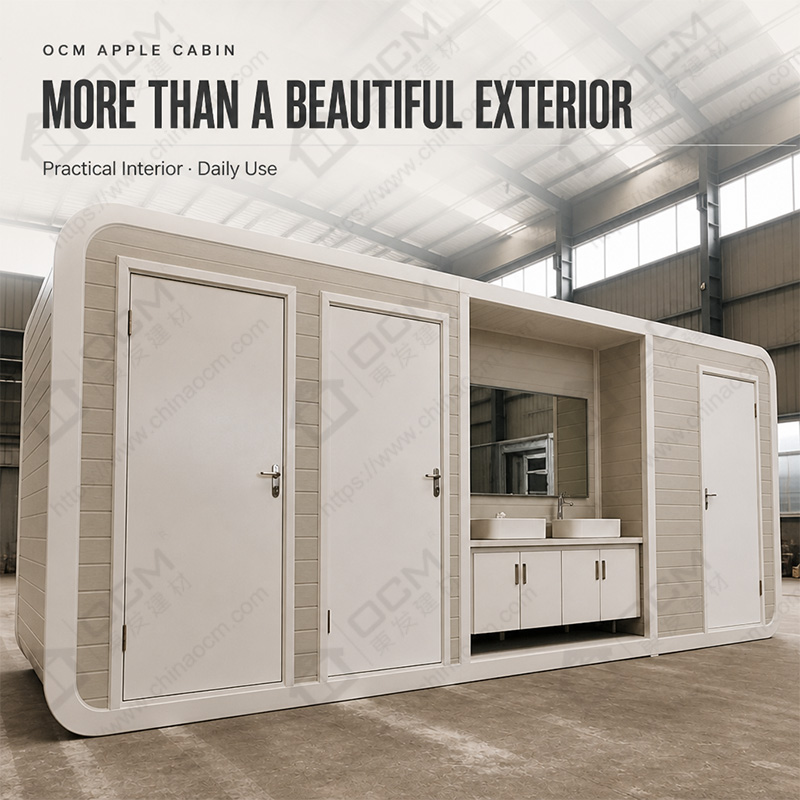
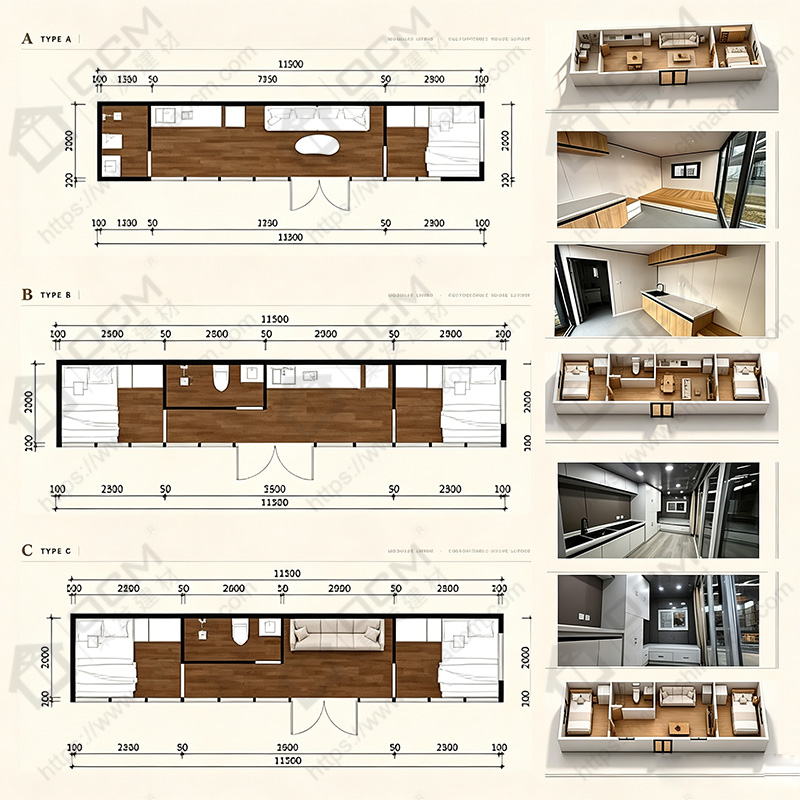
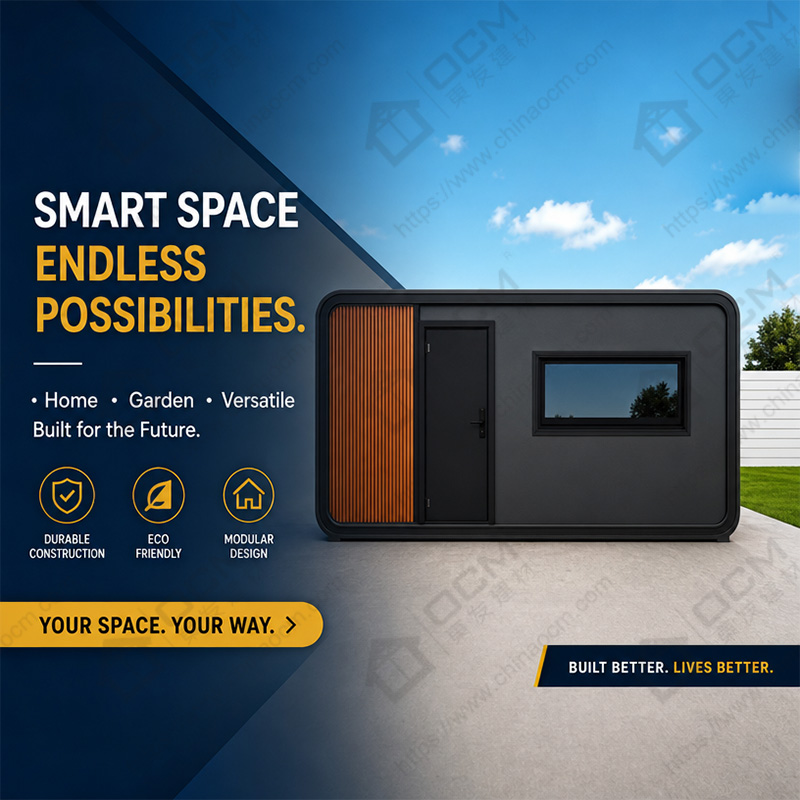
One of the most important considerations for an Australian Apple Cabin is that Australia does not have one single climate. A project in tropical Queensland has different requirements from a cabin installed in Victoria, Tasmania or a cooler mountain region. Therefore, the building specification should be matched to the actual project location rather than using one standard insulation package across all Australian markets.
In hotter climates, the building envelope should consider roof insulation, solar exposure, windows, ventilation, shading and cooling. Large glazed areas can provide attractive views but can also increase solar heat gain, so window specification and orientation should be considered carefully. In cooler regions, thermal insulation, heating, windows and condensation management become more important.
The roof, walls and floor should be considered as one thermal system. A cabin with insulated walls but poor roof insulation may still become uncomfortable during extreme temperatures. Likewise, a raised cabin should receive appropriate attention to floor insulation. HVAC can also be integrated depending on the project specification.
For Australian buyers, it is important to distinguish between the factory's product specification and the final site's regulatory requirements. Local planning, structural, electrical, fire, foundation and other building requirements may vary by state, territory, council and project use. OCM can provide product and technical information, while the buyer's local building professionals should confirm the final project compliance requirements.
An Apple Cabin should be designed around the application rather than simply around an exterior shape. A backyard guest cabin may need a compact bedroom, bathroom and kitchenette. A glamping unit may place more emphasis on a large window, premium interior, comfortable bed, bathroom and outdoor deck. A resort cabin may require a more complete hospitality package with furniture, HVAC, lighting, kitchen, storage and customized finishes.
Exterior customization can be equally important. The cabin may need to match a resort's visual identity, surrounding landscape or architectural concept. Colors, exterior finishes, windows, decking and other external elements can be coordinated as part of the design discussion.
For larger projects, customization should also consider maintenance. Using standardized components across multiple cabins can simplify future replacement and servicing. A developer may therefore choose one exterior design and two or three standardized interior layouts rather than creating a completely different cabin for every room.
Buying from a Chinese factory means transportation must be considered from the beginning. The buyer should confirm the cabin's transport dimensions, weight, packing arrangement and shipping method. International sea freight is only one part of the logistics process. After the cabin reaches an Australian port, it still needs customs clearance, local transportation and delivery to the project site.
Site access should be checked before ordering. The developer should consider road width, turning space, bridges, overhead restrictions, slopes and the final location of the cabin. A crane or other lifting equipment may be required depending on the model and site conditions.
The foundation should also be prepared before the cabin arrives. Depending on the model and engineering requirements, this may involve concrete, piers, steel supports or another suitable system. The foundation should reflect the final support points and installed dimensions of the cabin.
Once positioned, the cabin may require final structural connections, utility connections, interior finishing and inspection. Electricity, water, drainage, kitchen and bathroom systems should be planned in advance so that the site is ready when the building arrives.
For Australian buyers, the most useful supplier is not necessarily the one offering the lowest product price. The manufacturer should be able to explain how the cabin is produced, customized, inspected, packed and prepared for export.
Buyers should ask about the factory's engineering capability, technical drawings, quality-control process, production experience, customization options and export support. A professional manufacturer should also be able to explain the differences between factory supply scope and local installation scope.
OCM House focuses on factory-based modular building solutions and works with international buyers on Apple Cabin projects for accommodation, tourism and hospitality applications. The factory can discuss project-specific floor plans, interior configuration, transport and technical requirements.
For developers planning several units, production consistency is especially important. The supplier should be able to reproduce the approved design and maintain consistent specifications across the project.
1. Can Apple Cabins be used as backyard accommodation in Australia?
They can be considered for backyard accommodation where the local site, planning and building requirements permit the intended use.
2. Are Apple Cabins suitable for Australian weather?
They can be configured for different climates, but insulation, windows, ventilation, heating or cooling and other building-envelope requirements should be selected according to the project location.
3. Can OCM customize an Apple Cabin for Australia?
Yes. OCM can discuss layouts, insulation, windows, doors, interior finishes, kitchen, bathroom and other project-specific requirements.
4. Can OCM ship Apple Cabins to Australia?
OCM works with international buyers and can discuss export packing, shipping and project logistics.
Australia offers a wide range of potential applications for Apple Cabins, including backyard accommodation, glamping, resorts, tourism and rural projects. The successful solution is not simply an attractive cabin. It is a complete system that combines suitable design, thermal performance, transportation, foundation, utilities and installation.
OCM House can work with Australian buyers and developers from the initial project brief through factory production and export preparation. Send your Australian project location, number of cabins and preferred application to OCM for a customized Apple Cabin solution.