EN
EN

Why Modular Accommodation Is Attractive to Tourism Developers
Tourism projects have a different construction logic from ordinary housing because the building itself is part of the guest experience. A resort developer needs accommodation that looks attractive, feels comfortable, can be repeated across the site and can be delivered within a business plan. Prefab container houses and modular cabins answer part of this challenge by moving production into a factory and allowing the project to use repeated independent units. OCM House offers Apple Cabins alongside expandable, shipping, flat pack, folding and detachable container houses, so different functions can be assigned to different modular systems within one development.
The concept is especially relevant to glamping, where guests expect the privacy and atmosphere of outdoor accommodation without giving up modern comfort. An individual cabin can include a bedroom, bathroom, living area, large windows and climate-control provisions while remaining physically separate from other guest units. The developer can then position cabins around natural features such as forest edges, lakes, valleys, vineyards or agricultural landscapes. This creates a more flexible site plan than a single large hotel block and can support phased growth as occupancy increases.
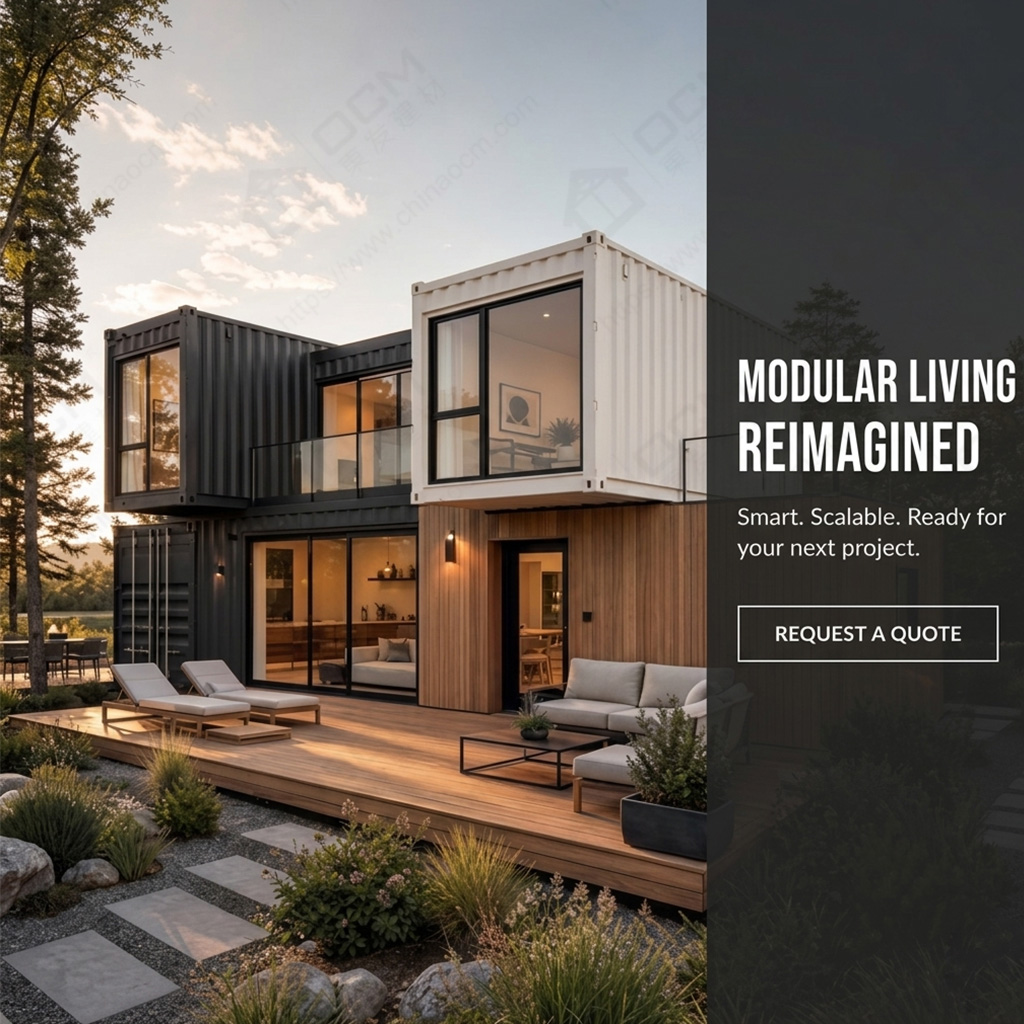
Apple Cabin and Expandable House for Guest Accommodation
Apple Cabin House is a natural fit for premium and design-led accommodation because the product is positioned around a cabin experience rather than a conventional industrial container image. OCM offers 20ft, 40ft and custom-size Apple Cabin models for applications including glamping resort accommodation and leisure use. Expandable container houses provide another option when the developer wants more usable interior width after deployment. The two products can therefore serve different guest segments within the same resort: compact cabins for couples, larger expandable units for families, and other modular buildings for staff or service functions.
The final choice should be based on guest behavior rather than product novelty. A couple may prioritize a large view window and an efficient bathroom. A family may require more sleeping capacity and a larger living zone. A resort operator may need housekeeping storage, kitchen functionality or accessible room layouts. These details should be built into the project specification before the units are manufactured. A good modular supplier works from the business model and site conditions, not simply from a standard catalog image.
Planning the Resort Site Around the Cabins
The cabin is only one part of the development. Site access, parking, landscaping, walking paths, utilities, drainage, wastewater, electrical supply and emergency access all need to be planned together. Delivery vehicles must reach the final building positions, especially when the project is in a rural or mountainous location. Foundations must be appropriate to the site, and utility routes should be finalized before production so that connections are ready when the units arrive. If the resort is expected to grow, the master plan should reserve space for future cabins from the beginning.
The visual relationship between cabins also matters. Guests do not want units packed so closely that privacy is lost. Orientation can be used to maximize views and reduce overlooking. Exterior finishes can create a consistent resort identity, while landscaping can soften the modular building form. OCM House offers customizable exterior finishes and layouts, which gives developers more freedom to create a coherent architectural concept instead of installing identical generic boxes across the property.
From One Cabin to a Modular Resort Portfolio
One of the advantages of modular construction is repeatability. Once the first accommodation model has been tested, the developer can order additional units using the same general specification. This simplifies training for housekeeping and maintenance teams because fixtures, finishes and room layouts are consistent. Replacement parts can also be standardized more easily. For developers building multiple locations, a standardized cabin design can become part of the company's brand identity.
A resort can also use different OCM product categories for different operational functions. Apple Cabins can serve premium guests, expandable houses can serve larger family accommodation, shipping container houses can become offices or stores, and flat pack or detachable buildings can provide staff and service facilities. This product ecosystem is one of the stronger commercial reasons to work with a manufacturer that offers several modular building types instead of a specialist that produces only one style of cabin.
OCM House for Glamping and Tourism Projects
OCM House describes itself as a direct manufacturer with more than 10 years of manufacturing, projects in more than 60 countries, more than 200 successful projects and more than 10,000 units of production output. Its engineers, factory production capabilities, customized layouts and technical documentation are relevant to tourism projects that require multiple repeat units. For international developers, the company can be approached with a complete site brief rather than a simple request for a single cabin price.
Send OCM the destination country, number of guest units, guest type, preferred cabin size, room functions, climate, exterior style, utilities and expected opening date. The factory can then help define the most appropriate modular system. Visit https://www.ocmhouse.com/ or contact +86 15162322239 and [email protected].
Recommended Closing CTA
For project-specific container house solutions, visit https://www.ocmhouse.com/ to review the OCM product range. Contact OCM Factory at +86 15162322239 or [email protected] with your destination country, application, quantity, preferred size and project requirements for a tailored quotation.